
Key Takeaways
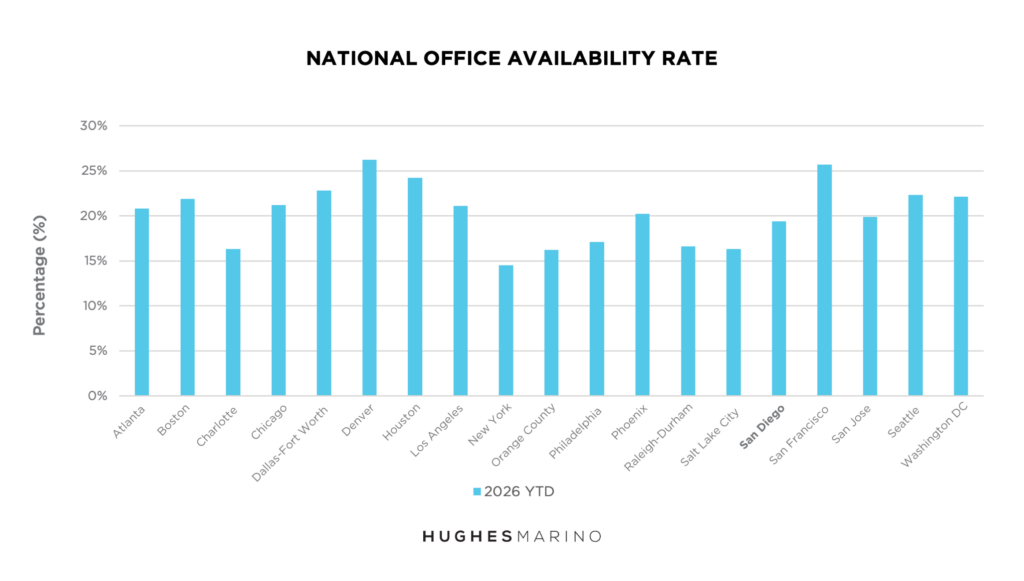
- San Diego office availability has settled at about 18%, healthier than roughly half of major U.S. markets, which remain above 20%.
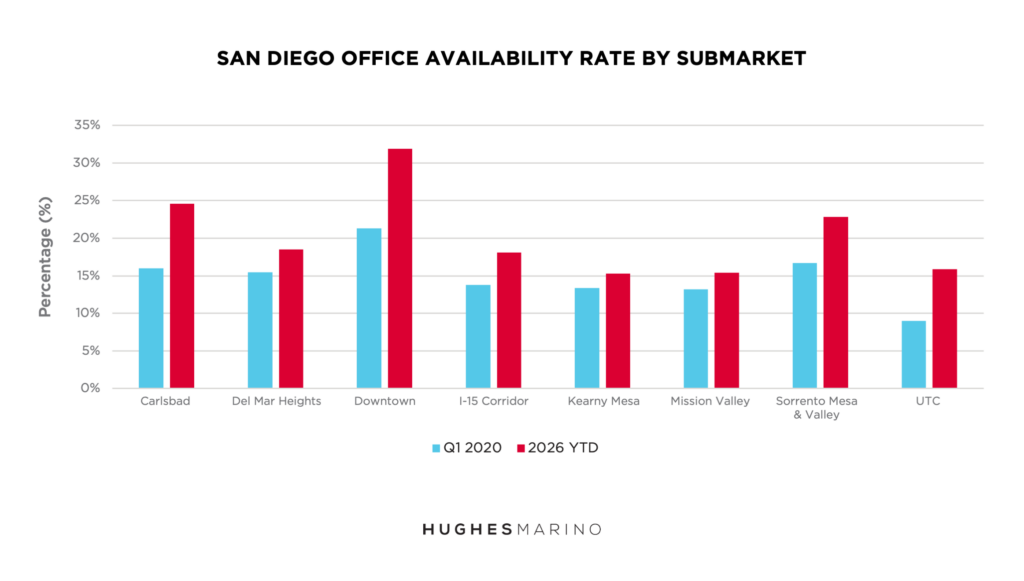
- Downtown, Carlsbad and Sorrento Mesa are the softest submarkets, each well over 20% available, with rents that generally favor tenants.
- Mission Valley, Kearny Mesa and UTC are the tightest, at about 15% available and in equilibrium.
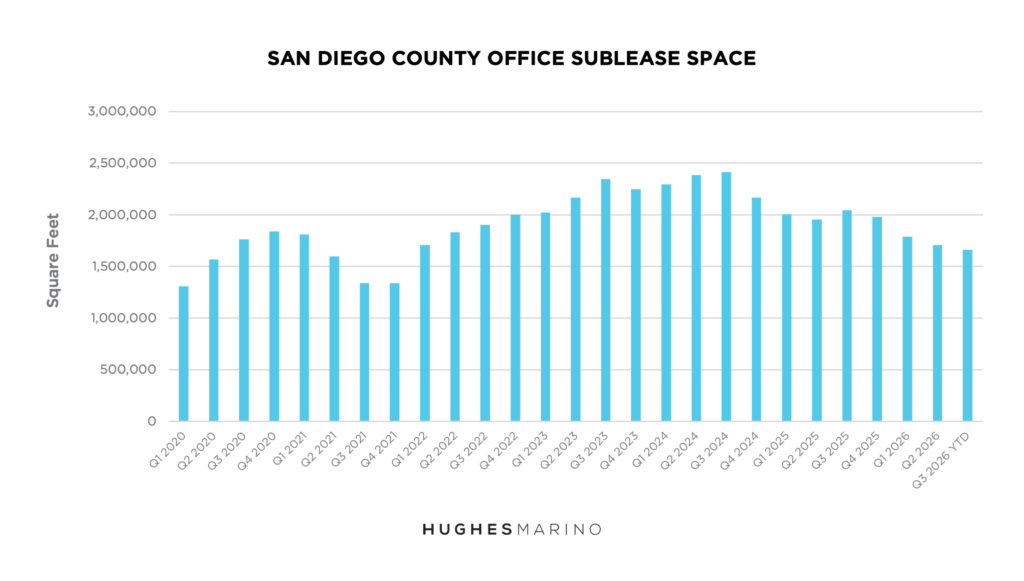
- Sublease space has fallen sharply over the last two years and is expected to return to pre-Covid levels by the end of 2027.
- Our advice: start early. Tenants who address their lease expirations proactively, with a tenant-only advisor, will find good values for several years to come.
The San Diego regional office market has entered a new normal 6.5 years post-Covid, as employers and employees have permanently settled into the new in-person, hybrid and remote work conditions. The result on office demand and market conditions has also then fallen into equilibrium conditions. When compared to the nation, San Diego is generally healthier than most major U.S. markets in terms of occupancy levels as shown by the chart below. Approximately half of the U.S. major markets are still trending above 20% availability, while San Diego has settled into a normalized 18%, and only one U.S. market, New York City, is below 15%.
Why San Diego Is Healthier Than Most U.S. Office Markets
San Diego’s strength is a function of several simultaneous events and conditions. On the supply side, San Diego did not have significant new office building construction underway in 2020 when Covid hit, so there were not many new buildings in the pipeline. Second, dozens of office buildings totaling over 1M SF came off the market in Torrey Hills, Del Mar Heights and Sorrento Mesa for conversion of office space to biotech wet lab research space to support the demand surge of life science companies for such lab space from 2020 through 2023. On the demand side, San Diego employees have typically not had one-way commuting conditions that exceeded half an hour on average, whereas many metropolitan areas have employee resistance to return to office due to extreme commute times. Also stabilizing demand, although many companies downsized from 2021 through 2023, it has been more common in 2024 and since for companies to renew their leases and maintain their footprints. Recently, the market has even been seeing a number of incremental expansions by local companies, including some law firms and financial services companies.
The Softest Submarkets: Downtown, Carlsbad and Sorrento Mesa
As we look at the major San Diego submarkets, it would be natural that availability rates today would be higher than the pre-Covid conditions. However, some submarkets are dramatically higher, which happen to be those same submarkets that were softer pre-Covid, including Downtown, Carlsbad and Sorrento Mesa as shown below. All three submarkets top well over 20%, making them the three softest markets in the region, where rents in each case are generally very tenant favorable. Downtown is one of the softest downtown markets in the United States, where market dynamics today are extremely volatile given the migration of tenants from the east side, where rents can generally range from $2.25 to $2.75, to the west side where rents more generally range from $2.50 to $4.50. The one market that is behaving irrationally is Sorrento Mesa, where some landlords are demanding rental rates for Class A space that are more expensive than options in neighboring UTC, so we can expect a pounding to start coming to Sorrento Mesa.
The Tightest Submarkets: Mission Valley, Kearny Mesa and UTC
The tightest markets are Mission Valley and Kearny Mesa, only marginally more available than their pre-Covid conditions, and UTC. All three markets are approximately 15% available, and very much in equilibrium where it’s neither a landlord market nor a tenant market. These markets have continued to remain in demand due to their central location, freeway accessibility and foundational industries that tend to be more in-person and recession-resistant, including engineering, financial services, insurance, legal and accounting, and other basic industries that are less volatile.
San Diego Office Sublease Space Keeps Shrinking
As it relates to sublease inventory, the market has shown a strong recovery as the chart below shows, where the amount of sublease inventory on the market has bled off significantly in the last two years. Sublease space either came off the market due to offering below-market rents, or simply due to the passing of time where the underlying lease expired. Sublease inventory is expected to continue a downward trend through the end of next year and revert to pre-Covid normalized conditions, as tenants no longer find that they’re carrying excess space.
What the New Normal Means for Tenants
Overall, the U.S. office markets have taken one of the biggest poundings that we’ve seen in the last 30 years, more dramatic than the 2000 Dot Com Bubble or the 2008 financial crisis. The difference this time is that Corporate America has structurally reduced its office requirements as a result of remote working and hybrid conditions that evolved and locked in place post-Covid, and are expected to be sustained for many years. Throughout the region, we are dealing with a new normal where tenants can expect to continue to find good values and numerous opportunities for several years to come, as long as they are proactive in addressing their lease expirations and aggressively go to market to create the proper leverage and optionality.
That’s exactly what we do. Hughes Marino specializes in representing tenants and buyers, not landlords, so there’s no conflict of interest when we take our clients to market. If your San Diego office lease is coming up, talk with our tenant representation team now, while there’s still time to build real leverage and options.
Frequently Asked Questions
San Diego office availability has settled at a normalized rate of about 18%. By our read, that makes San Diego healthier than most major U.S. markets: roughly half are still above 20% availability, and only one, New York City, is below 15%.
We point to both sides of the market. On supply, little new office construction was underway when Covid hit, and more than 1M SF in Torrey Hills, Del Mar Heights and Sorrento Mesa was converted to life science lab space. On demand, commutes are shorter than in many metros, and since 2024 more companies have renewed rather than downsized.
Downtown, Carlsbad and Sorrento Mesa are the softest submarkets, each well over 20% available, and rents there are generally very tenant favorable. Downtown is one of the softest downtown markets in the country. We also expect Sorrento Mesa landlords asking more than neighboring UTC to face real pressure.
Mission Valley, Kearny Mesa and UTC are the tightest, at about 15% available. We see them in equilibrium, neither a landlord nor a tenant market, thanks to central locations, freeway access and steady in-person industries such as engineering, financial services, insurance, legal and accounting.
Yes. Sublease inventory has fallen significantly over the last two years, as space was leased at below-market rents or came off the market when the underlying lease expired. We expect it to keep falling through the end of 2027 and return to pre-Covid levels.
Start early. Tenants can expect good values and many opportunities for several years, but only if they address their lease expirations proactively and test the market to create real leverage and options. That’s the process we run for our clients.
A landlord’s broker works for the building owner. Hughes Marino specializes in representing tenants and buyers, not landlords, so there’s no conflict of interest: our only job is to get our clients the best possible terms, whether that means renewing, expanding or relocating.
Market statistics provided by CoStar Group.