


What You Need to Know
SB 1171, the California broker agency disclosure law pioneered by Hughes Marino Founder Jason Hughes, took effect on January 1, 2015. The law requires commercial real estate brokers to disclose to clients at the outset of their working relationship whether they represent the seller/landlord, the buyer/tenant, or both in any real estate transaction.
Commercial tenants should pay close attention to the disclosure form their brokers will ask them to sign, which explains the broker’s duties to the client as well as the risks of working with a broker who represents both tenants and landlords (known as a “dual agent”). Critically, a dual agent is not allowed to disclose confidential information between parties, which reduces them to the role of a simple messenger rather than a savvy negotiator.
What Does SB 1171 Require?
Under SB 1171, California commercial real estate brokers must:
- Disclose their agency relationship in writing before or at the time of beginning to work with a client in any commercial real estate transaction
- Use the standardized Commercial Property Disclosure form to identify whether they represent the landlord/seller, the tenant/buyer or both parties
- Explain the broker’s duties to the client under each type of representation
- Disclose the limitations of dual agency, including the prohibition on sharing confidential information between parties
- Obtain the client’s written acknowledgment of the disclosed agency relationship
The law applies to commercial leases and commercial real estate purchase transactions, not to residential real estate, which is governed by separate statutes.
What to Look for in Your Broker Agency Disclosure Form
When a commercial real estate broker asks you to sign an agency disclosure form, pay close attention to how they have identified their role. The form will indicate one of the following:
Landlord’s/Seller’s Agent
The broker represents the landlord or seller. Their fiduciary duty runs to the other side, they are not your advocate. Do not share confidential information with them.
Tenant’s/Buyer’s Agent
The broker represents you. They are obligated to act in your best interest, negotiate on your behalf and keep your information confidential from the other party.
Dual Agent
The broker represents both parties. They cannot fully advocate for either side and are prohibited from disclosing confidential information between you and the landlord or seller. Before signing, understand exactly what you are, and are not, getting from this arrangement.
If you are asked to sign a dual agency disclosure, consider carefully whether you would benefit from retaining an advisor who represents you exclusively.
The Risks of Working with a Dual Agent
For commercial tenants and buyers, the risks of dual agency are material, not theoretical. Here is what you stand to lose:
- Negotiating power. A dual agent cannot use information about the landlord’s flexibility, vacancy costs or competing offers to strengthen your position.
- Confidential advice. You cannot freely share your budget ceiling, timeline urgency or deal-breaking terms with a dual agent without the risk that information influences the other side.
- Unfiltered recommendations. A dual agent has a financial incentive to close the deal, not necessarily to find you the best space at the best terms.
- Legal protection. Fiduciary duties are diluted in a dual agency arrangement. Your agent’s obligation to advocate zealously for you is legally limited.
Commercial leases typically run five to 10 years and represent one of the largest financial commitments a business will make. The broker you choose, and the agency relationship you agree to, shapes every term of that commitment.
Why Exclusive Tenant Representation Matters
Hughes Marino was founded on the principle that commercial tenants and buyers deserve the same undivided representation that landlords and sellers receive. We represent tenants and buyers, not landlords.
That means when you work with Hughes Marino, your advisor:
- Owes their full fiduciary duty to you, not to a landlord, not to a developer, not to a building owner
- Can freely share market intelligence, negotiating insights and comparable transaction data on your behalf
- Has no financial conflict in steering you toward one property versus another
- Is legally and contractually obligated to act in your best interest at every step
SB 1171 gave California commercial tenants and buyers the right to know what they’re getting before they sign. Use that disclosure to ask the right question: does this broker work for me, or for the other side?
Frequently Asked Questions About Dual Agency and SB 1171
Dual agency in real estate occurs when a single broker, or two agents from the same brokerage, represents both the buyer and seller, or both the landlord and tenant, in the same transaction. A dual agent cannot fully advocate for either party, disclose confidential information between the sides, or negotiate aggressively on one party’s behalf. They are legally limited to facilitating the transaction as a neutral intermediary.
SB 1171 requires California commercial real estate brokers to disclose their agency relationship in writing before or at the time they begin working with a client. Using a standardized Commercial Property Disclosure form, brokers must identify whether they represent the landlord/seller, the tenant/buyer, or both parties as a dual agent. Clients must acknowledge the disclosure in writing. The law also requires brokers to explain the limitations of dual agency.
SB 1171 took effect on January 1, 2015. It was pioneered by Jason Hughes, Founder of Hughes Marino, who advocated for mandatory broker agency disclosure in commercial real estate after observing how the lack of transparency consistently disadvantaged tenants and buyers.
No. SB 1171 applies specifically to commercial real estate transactions, commercial leases and commercial property purchases. Residential real estate in California is governed by separate disclosure statutes. The absence of a comparable requirement in commercial real estate before 2015 is precisely what made SB 1171’s passage significant.
A commercial real estate agency disclosure form is the written document brokers are required to provide under SB 1171. It identifies whether the broker represents the landlord/seller, the tenant/buyer, or both parties (dual agency). It also describes the broker’s fiduciary duties and the limitations that apply under each type of representation. Clients must sign the form to acknowledge receipt before proceeding.
Yes, with written disclosure and consent from both parties, a California commercial real estate broker may act as a dual agent. However, acting as a dual agent legally limits what the broker can do for either party, they cannot share confidential information between the parties or negotiate aggressively on either side. Many commercial tenants and buyers who understand this choose to seek a broker who represents them exclusively.
The primary risk is a fundamental conflict of interest. A dual agent cannot disclose the landlord’s negotiating flexibility, bottom-line rent or motivation to the tenant, and cannot disclose the tenant’s budget ceiling, urgency or priorities to the landlord. This reduces the broker to the role of a neutral messenger rather than an advocate. For tenants entering multi-year lease commitments, this can result in less favorable terms, missed concessions and reduced negotiating leverage.
Look first at how the broker has identified their role: landlord’s/seller’s agent, tenant’s/buyer’s agent or dual agent. If they have disclosed dual agency, understand that they cannot freely share confidential information on your behalf or advocate exclusively for your interests. Before signing, ask whether the brokerage represents landlords or building owners in any capacity, and consider whether exclusive tenant representation would better serve your interests.
In exclusive tenant representation, the broker’s full fiduciary duty runs to the tenant or buyer alone. They have no relationship with the landlord, no listing agreements on the other side, and no financial incentive to favor any particular property. They can negotiate aggressively, share all available market intelligence and advocate for the best possible terms without the constraints of a dual agency arrangement. Hughes Marino represents tenants and buyers, not landlords.
SB 1171 was pioneered by Jason Hughes, Founder of Hughes Marino. After years of observing commercial tenants unknowingly working with brokers who also represented landlords, and suffering worse outcomes as a result, Hughes advocated for mandatory written disclosure in commercial transactions. The law was designed to give California’s commercial tenants and buyers the basic right to know who their broker actually works for before committing to a transaction.
More Information

Why SB 1171 Is a Victory for Tenants
Hughes Marino Founder Jason Hughes explains why he championed the bill, and what it means for commercial tenants.

For Brokers: Get the Disclosure Form
Download a sample copy of the disclosure form that SB 1171 requires all brokers to present to their clients.
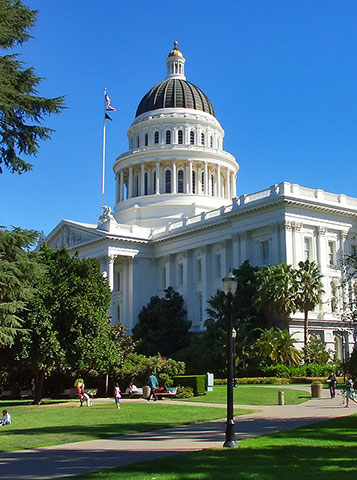
Read the Full Text of the New Law
Read Senate Bill No. 1171, review legislative analysis, and view the full text of today’s law as amended.