
How Hospitality-Inspired Thinking Can Reshape the Way We Experience the Workplace
By Nicholas Willis
The role of traditional office space has evolved over the last several years. The office environment has been reshaped in part by attendance and the emergence of remote and hybrid work. Once vibrant environments that were designed for employees to have dedicated focus space can now feel empty and underutilized in a hybrid work environment. Despite signs that in-office participation is on the rise, business leaders have struggled to compel employees to return to the office without a mandate.
This presents both a challenge and an opportunity: how do you create an office environment that feels energized and dynamic even when underutilized, and an office that is a magnet for talent, collaboration and culture?
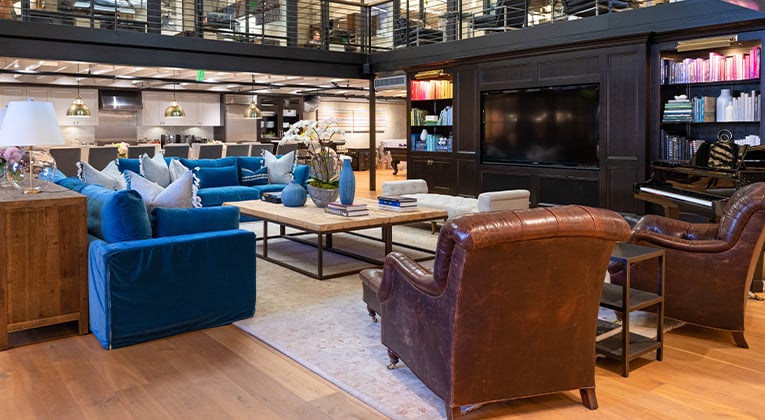
To remain relevant, office spaces must evolve into destinations, places people choose to go, rather than places they’re obligated to be. A destination office enhances a person’s work experience and well-being. A destination office is a hub of identity, connection and creativity, not just productivity.
People are drawn to experiences, not assignments. The office environment becomes attractive when it offers emotional and cultural resonance. Attraction leads to voluntary participation and builds momentum and culture, creating a self-sustaining energy that turns space into community.
Basic amenities such as dedicated desks, “Zoom rooms,” lounges and vibrant break areas are now table stakes and often expected. Employees want environments that foster inspiration and purpose. When your office delivers these expectations, it becomes a strategic asset that drives a return on investment, not just commands a rent payment.
Programming Principles that Deliver Value
As the principal architect of one of the nation’s largest woman-owned commercial real estate tenant representation firms, I often discuss with our business owners and executive clients the importance of designing a destination that attracts their team back to the office, while being mindful of cost, practicality and efficiency. I am also personally invested in and intrigued by how space makes us feel, the emotion that it elicits, and the energy and productivity it can create.
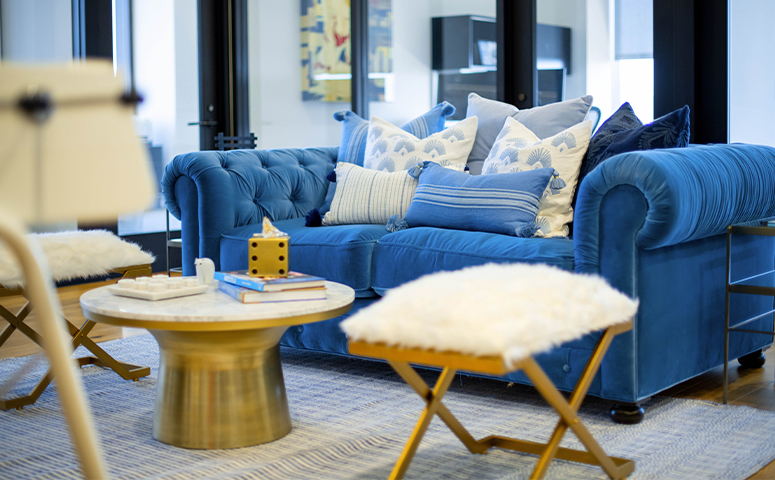
Of course, we know what truly sustains office presence is the collection of people and the incentives available, a shared culture, a sense of being, mentorship and advancement opportunities, and functional attributes. Not an amazing office design. That said, a well-designed office should be regarded as a fundamental prerequisite to creating a destination.
Hospitality settings like resort and club environments offer a template for programming an office space through how they employ visceral connections, nodes for activity and independence and intentional experiential design. The success of a hospitality design lies in layered experiences starting with grand and welcoming arrivals, seamless indoor-outdoor flow, curated wellness amenities, cultural programming, a careful mix of private and public spaces, and exclusive experiences that make people feel part of something special. Hospitality programming for an office environment should include:
Choosing the Correct Building Floorplate: The floors of office buildings come in all shapes and sizes, and priority needs to be focused according to the intended layout and function of the office. For example, technology firms may benefit from deep bay depths for maximum visibility across open office environments, while professional services firms or law firms with perimeter, glass-line office requirements will benefit from long, rectangular buildings with shallower bay depths. Choosing the right type of building for your business use will improve efficiency and eliminate underutilized areas.
Create Branded Arrival Moments: Establish your unique, branded environment from the entry, but keep it warm and hospitable. Soften the rigidity of the traditional reception desk, seating area and conference room. Just as luxury hotels choreograph every moment from the curbside to check-in, offices can create memorable impressions with artful lobbies, ambient lighting, hospitality-centered staff and personalized technology.
Reserve Prime Real Estate: Protect the perimeter glass line where the nicest views are for social, amenity and community zones. This will encourage use of these amenity spaces, while also signaling to employees that they are as valued as the senior staff or management.
Densify Appropriately but Carefully: Densify individual focus work areas to create more energy and free up space for other uses, but be sensitive to the amount of utilization expected. More density will not be uncomfortable if staff are on a hybrid schedule, but full-time in-office teams need more space. Densifying appropriately strikes a balance between maintaining personal space while creating a sustainable energy flow.
Flexible Floor Plans: Keep the floor plan design flexible and modular to enable different uses and densities over time. Private offices can become future video conference rooms or conference lounges, open office areas can be transformed over time based on how furnishings and technology activate the area.
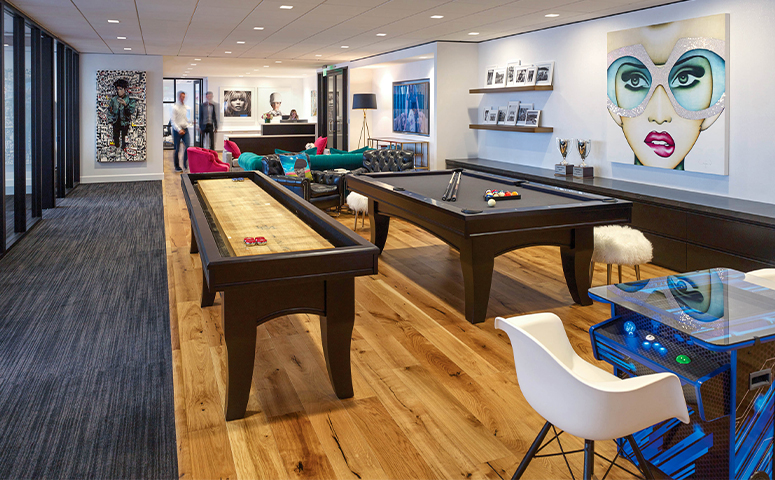
Invest in Activation: Technology, programming and curation turn passive circulation space into visually activated experiences. Invest in artwork, digital displays and botanical elements.
Architectural Enhancements
Architecturally, the destination office can benefit immensely by prioritizing these best practices in the overall design. In fact, it is hard to create an unsuccessful office space when it contains these base elements:
Volume: Maximize ceiling heights in open spaces to create grandeur while maintaining intimacy through articulating lower ceiling transitions in rooms or focus areas.
Light: Prioritize natural light, minimize ambient artificial lighting, and use direct and feature lighting to add depth, making a space feel more dramatic.
Connection to the Outdoors: Incorporate operable windows, terraces and outdoor access to enhance well-being. Where possible, allow for fresh outside air.
Transparency: Use glass and open layouts to carry natural light through and expand perceived space.
Materiality and Texture: Employ natural materials and tactile finishes to enrich the sensory experience.
Sensory Design: Use scent, sound and touch to activate a visceral experience.
Final Thoughts
Every company is different, but more than ever, there is crossover from industry to industry in how space is used and how it can be activated. There’s no universal standard for creating a destination office, but the goal is to create resonance—a place that makes people feel proud, energized, creative and part of something bigger, a place that invites them in and keeps them coming back.
This is not just a design challenge, rather it’s an opportunity to redefine the role of the workplace in modern life. In embracing the destination office, companies can create spaces that increase participation, inspire and retain employees, foster community and culture, and give teams a feeling of pride and belonging.