





Your Vision. Our Expertise. A Seamless Path from Concept to Completion.
At Hughes Marino, we serve as your dedicated advocate throughout every phase of your project, acting solely in your best interests and not in those of a landlord. Our commercial construction management team, working alongside our program and project management teams, brings decades of experience working within the development, tenant representative and contractor areas, giving you the expertise, leadership and protection you need to deliver a successful build.
From a single build-to-suit to a multi-location project, we offer commercial construction project management services to oversee the entire process to ensure your project is delivered on time, on budget and exactly as envisioned. With no conflicts of interest and a true fiduciary duty to tenants and owner-occupiers, your goals always come first.
Services & Additional Services
Services
- Site and/or building due diligence
- Building standards and base systems evaluation
- Schedule and responsibility chart development
- Preliminary and final budget preparation
- Work letter review
- Architect/design consultant selection
- Architect, engineer and consultant coordination
Additional Services
- Construction document quality assurance review
- Value engineering/analysis
- Contractor bid process and evaluation
- General contractor/construction process management
- Master budget maintenance and invoice review
- Vendor assistance: furniture, AV, security, tele/data
- Green building assistance
- Construction document quality assurance review
Why Choose Hughes Marino for Program, Project & Construction Management Services
Exclusive Representation: We advocate solely for tenants and owner-occupiers, ensuring your interests are always put first.
Budget Protection: We help you maximize every project dollar and avoid preventable cost, schedule and quality issues.
Decades of Experience: Our team has led more than $2B in construction projects nationwide with proven, hands-on expertise.
National Reach: We deliver consistent, knowledgeable project support across office, industrial, lab and flex spaces in markets throughout the country.
Client Benefits:
- Clear coordination from site selection to move-in
- Transparent reporting on costs, milestones and project status
- Streamlined communication with a single accountable lead
- Proactive risk management and quality assurance
- Scalable solutions tailored to your growth and technical needs
Building Trust from the Start
We are honored by the national recognition for our service and culture we’ve received over the years, including the praise from our clients.
From project inception to our grand opening celebration, Hughes Marino was with us every step of the way. The on-time/on-budget result was a magnificent state of-the-art campus that now enables legendary discovery to scientists around the globe.
Bill Kullback
CFO, BioLegend
See why companies choose Hughes Marino for their program, project and construction management and other commercial real estate needs.
Frequently Asked Questions About Commercial Construction Management
Hughes Marino provides project management services for all phases of a construction project, including: Entitlements, lease negotiations and work letter review, site/building due diligence, scheduling, budgeting, design, construction and occupancy.
The earlier we are brought into the process, the more value we can bring to the table. Regardless of how far along a project is, we can always deliver valuable advice and leadership. With a high quality project management team on board, potential problems can be identified and averted, such as work scope definition, budget allocation, building material selection and work schedule coordination.
Our fees vary from project to project depending on a series of factors, including the size and duration of the assignment and the scope of services to be provided. We find it is best to meet with a prospective client and obtain a clear understanding of the project parameters and desired services before proposing a fee structure. This allows us to tailor our services to meet the specific needs of each client and provide tremendous added value to our clients within their budget.
Hughes Marino does not employ any architects, engineers or general contractors. We feel our clients’ needs are best served by helping them select the best consultants and general contractors for the specific needs and unique characteristics of their project. By approaching each project in this manner, we are able to obtain best-in-class services for our clients at competitive rates.
Hughes Marino will not hold the contracts with the architect, engineers or general contractor. However, we will help to review and negotiate the terms and conditions of each of these contracts for our clients and make final recommendations for their approval. Final contracts will be approved and signed by either the client or the owner of the property, depending on the specifics of the transaction or project.
The section in a commercial real estate lease that addresses design and construction of initial improvements is typically called the “Work Letter.” This section of the lease should address:
• Tenant Improvement Allowance (TI or TIA), and the methodology and requirements for fund disbursements;
• Process and protocol for tenant submittals and landlord approvals;
• Process and protocol for change orders, landlord or tenant project delays and/or cost overruns;
• Definition of Building Standard Improvements;
• Landlord warranties;
• Responsible parties for landlord and tenant, and the appointed Project/Construction Manager;
• Other relevant project details.
It is important to have a qualified project manager review this important section of the lease. Failure to clarify each item and clearly understand the intent can cause significant issues once the lease is signed.
Most businesses leasing space or buying a building will need to make some sort of modification to the existing space to meet the specific needs of its operation. Typically, a landlord will either complete a defined scope of work as part of the lease agreement, or the landlord will provide an allowance for the tenant to use toward the cost of building modifications. This allowance is called the “Tenant Improvement Allowance” or TI allowance. There are a number of pitfalls that a tenant should be careful to avoid when contemplating building modifications using a Tenant Improvement Allowance, and it is important to have a qualified project manager on your side. A good project manager offers guidance with regards to due diligence for base building conditions, a preliminary project budget to ensure adequacy of the allowance, a review of the Building Standard to ensure that the allowance can be used for the intended improvements, and a review of the cash flow implications of the project funding and reimbursement protocol.
Landlords typically address the TI allowance and their strict rules for its proper use in an addendum to the lease called a Work Letter. This section of the lease spells out the terms and conditions associated with the TI allowance, including how much is to be paid and by whom, what those funds can be applied towards, any conditional requirement for the release of those funds, and how and when the funds will be distributed. Unfortunately, most TI allowances only cover three categories of expense: (i) design, engineering and project management fees, (ii) permit fees, and (iii) actual construction costs. In addition to these costs, there is a myriad of additional items that are not always covered by the TI allowance, such as phone/data cabling, security, phone systems, audio visual equipment, and furniture, including workstations, moving costs and signage. It is important to have a qualified project manager assess your needs and review the Work Letter in order to avoid expensive mistakes and misunderstandings.
As part of a lease, the landlord may be responsible for designing, constructing and funding “Building Standard Improvements.” These improvements are typically very elementary and include basic flooring, ceilings, lights, doors, etc. It does not always include a number of fundamental items such as a reception desk, break room cabinetry and sink, upgraded carpet or tile, glass sidelights or interior windows, extra power for specialized equipment, specialty lighting or 24 hour HVAC for a server room. It is important to have a qualified project manager assess your specific needs and make sure that standard improvements are clearly defined to meet your specific requirements and expectations. Failure to do this may result in disappointment in the quality of your improvements or additional costs.
When providing a TI allowance, the landlord will want to define the condition of the space prior to the start of any tenant improvements. The most basic level of finish is referred to as “cold shell.” This means you are getting four walls, a roof and a floor. Nothing else is provided in the space—no restrooms, HVAC, electrical, stairs, mezzanines or elevators. The intent of a cold shell delivery is that the TI allowance will be used to pay for ALL improvements to the space. It is important to have a qualified project manager assist in determining your specific needs for the space and anticipated costs. Starting from a cold shell can add more than $15/SF to $30/SF to the cost of the tenant improvements above a warm shell or existing space to be remodeled.
The next level of improvements above a cold shell is a “warm shell.” A “warm shell” is similar to a cold shell but will typically include improvements to the common areas of the building such as restrooms, lobbies, corridors and elevators. It may also include utilities such as HVAC, electrical, and plumbing stubbed into the space. It will not include any other improvements inside the space. These other improvements will be constructed as part of the new tenant improvements. Failure to identify key elements of the project that should be included in the base building condition could cause additional items to be charged against the TI allowance that had not been anticipated, reducing the balance available to complete the desired improvements.
As part of the Work Letter, the landlord may specify that the improvements be completed on a “Turn Key” basis. This means the landlord will work with you to identify a floor plan and description of the components of your new space and then design, permit and construct the space for you. This system works well for smaller spaces, but is not recommended for spaces over 10,000 square feet or with estimated TI costs of more than $500,000. When agreeing to move forward with a Turn Key project, it is important to make sure that you work with the landlord to clearly identify your specific needs and desires, including the look and finish of the space as well as any special electrical or HVAC requirements. Ideally, when using a Turn Key methodology, the lease should include a final space plan with detailed notes approved by both landlord and tenant. Failure to do so could result in negative surprises and/or space that does not meet your expectations.
For projects larger than 10,000 square feet or with estimated TI costs of more than $500,000, we do not recommend the Turn Key delivery method. We feel it is best for you and a qualified project manager to manage the process and the budget. Remember, it is your money to be paid to the landlord over the duration of the lease. We act as your construction expert and provide better management of these funds, stretching your dollar and making it possible to get more bang for your buck. It also ensures that the landlord is not using your TI allowance to pay for building upgrades, equipment maintenance or repairs, or paying higher than competitive fees for design or construction.
In addition to the cost of design, permits and construction, most projects also have costs associated with furniture. The cost of furniture can range wildly from $0/SF (by reusing all of the existing furniture) to above $70/SF depending on the specific requirements of a particular client. For example, the cost to furnish a standard office can range between $400 to over $20,000 for a CEO’s office, and the cost of a cubicle can range from $1,200 to over $10,000 for the latest models with attachments, fancy fabric, glass and paneling. It is best to work with your project manager and architect and establish a budget for each area. You can then work with your team to identify potential furniture vendors and determine which furniture fits within your budgets.
There is no single answer to the question, “What will it cost to move?” The following guidelines will help you as you begin evaluating an upcoming relocation. Depending on the size and complexity of the project, a professional relocation manager may be appropriate. These consultants typically charge on an hourly basis, and the fee can range from $0.50/SF to $1.00/SF. You can also anticipate an additional $1.00/SF to move standard furniture and personal content. This excludes costs of moving any existing systems furniture as well as additional smaller costs such as new business cards, signage, phone and copier relocation, etc. Our team at Hughes Marino helps you to assess your specific needs and make sure that you are positioned to relocate in the most efficient way possible. Click here for our free Business Move Checklist.
Our Awards & Recognition: Excellence in Every Project
We are humbled that Hughes Marino’s commitment to client success has earned national recognition for service, culture and results.
Ready to Build with Confidence?
Schedule a consultation with our commercial construction management team.
Schedule Consultation
Project & Construction Management Insights
-

Build-to-suit commercial real estate offers businesses a strategic path to create customized workspaces tailored to their exact operational needs. As companies navigate evolving market conditions in 2026—from hybrid work models to elevated construction costs—understanding how to leverage build-to-suit developments affordably has become essential. This guide explores the fundamentals of build-to-suit projects, current financing realities, market opportunities and practical steps to…
-
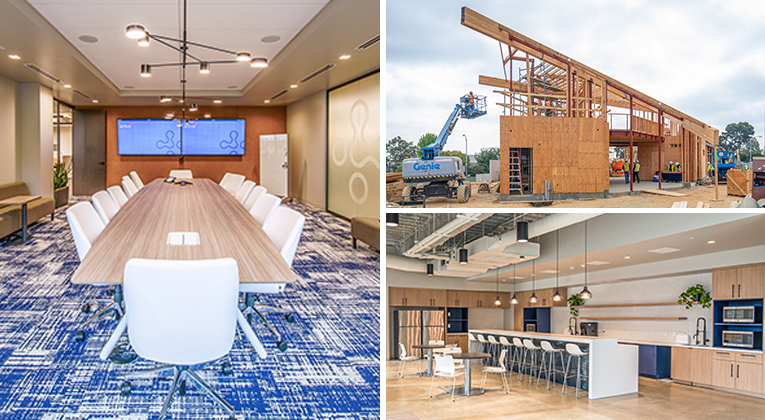
As summer is in full swing, our Hughes Marino program, project and construction management team continue to work hard on many exciting projects around our communities. Here’s an inside look at some of the progress.
-

Over the many years of representing companies in their lease negotiations, as well as assisting in planning, build out, tenant improvements and expansions, our team at Hughes Marino has gained extensive knowledge observing the intricacies of moving a business.
-
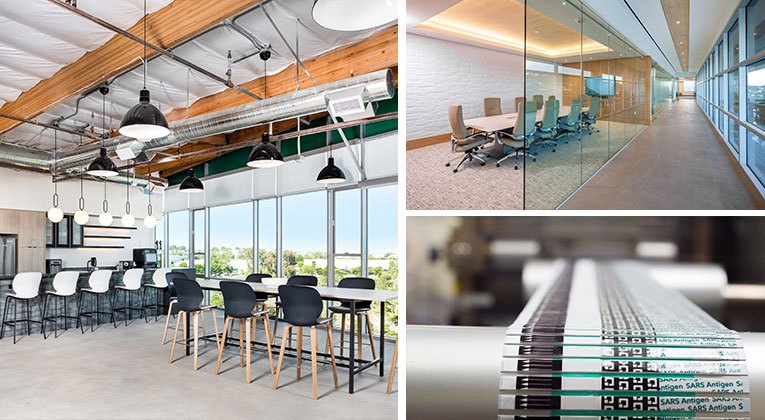
From life science facilities to corporate headquarters, our Program, Project and Construction Management team has been working with a variety of clients. Here’s an inside look at some of the projects we are honored to be a part of.
