

San Francisco’s office market is recovering. In Q1 2026, tenants absorbed 1.8 million square feet of office space, the highest quarterly net absorption recorded in over 25 years, as AI and frontier technology companies drive a significant return to physical space. The citywide availability rate fell from 35.8% to 33.3% last quarter. For the past several years, the San Francisco office market has been defined by uncertainty: elevated vacancy, excess sublease inventory and a fundamental reset in how companies think about the workplace. As tenant advisors, we are not in the business of calling a bottom in the market. But what we see on the ground is clear: momentum has shifted.
AI Companies are Reestablishing the San Francisco Office Market
The early phase of recovery has been led by AI and frontier technology companies. These firms, often highly collaborative and operating at an intense pace, have largely rejected fully distributed work models in favor of being together in the office.
For many of these companies, proximity is not a preference, it is a requirement. Speed of iteration, talent density and the need for constant collaboration are driving a return to physical space, particularly in well-located, high-quality buildings.
Over the past 12–18 months, this cohort has steadily absorbed space across Mission Bay, SoMa and Jackson Square, often targeting plug-and-play environments that allow for immediate occupancy.
Larger Commitments Are Following
What is different today is that demand is no longer limited to early-stage companies taking smaller footprints. We are now seeing a progression into larger, more strategic commitments—an important signal for the broader market. That demand is now showing up in the data in a meaningful way: tenants absorbed 1.8 million square feet of office space in the first quarter of 2026—the highest quarterly net absorption recorded in over 25 years.

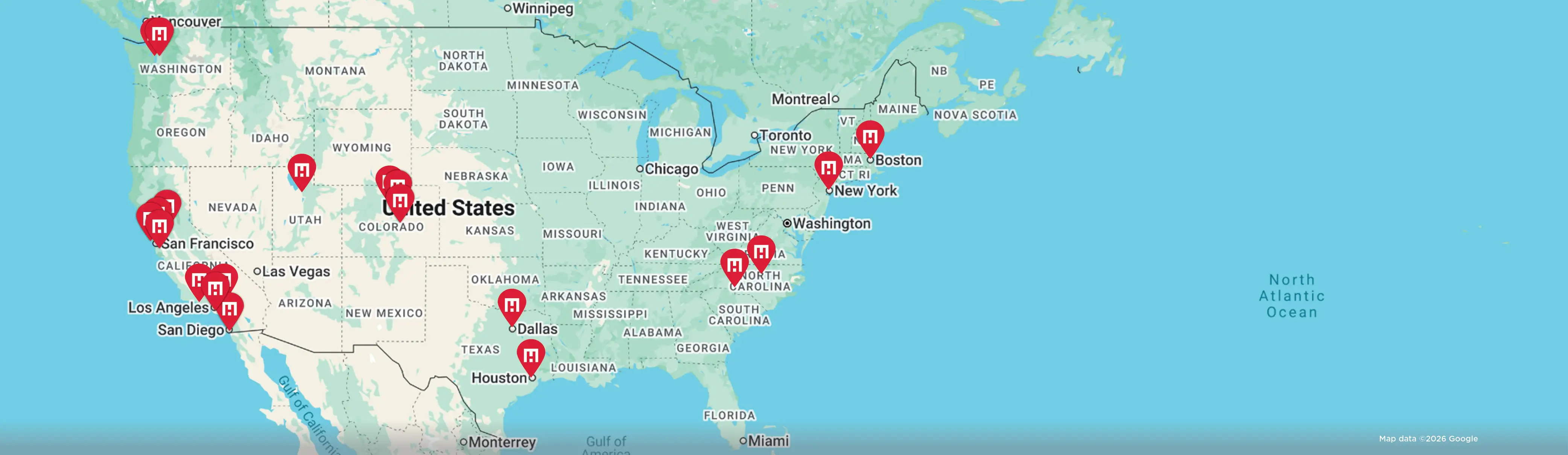
Recent transactions underscore this shift which are shown on map above:
| Company | Size | Address | Details |
| Anthropic | 420,000 SF + 100,000 SF | 300 Howard / 400 Howard | Full-building lease + 3-floor lease; total SF footprint now 850,000 SF |
| Sierra | 300,000 SF | 185 Berry (Wharfside) | Anchor lease |
| OpenAI | 222,000 SF | 1800 Owens | Sublease; total SF footprint now over 1,000,000 SF |
| Crusoe | 135,000 SF | 225 Bush | Expansion and renewal |
| Databricks | 90,000 SF | 1 Sansome | Expansion (after initial 150,000 SF lease signed late 2025) |
| Ramp | 82,000 SF | 235 Second | New lease to backfill Sierra |
| Handshake | 80,000 SF | 225 Bush | Expansion and renewal |
| Perplexity | 80,000 SF | 181 Fremont | Sublease from Meta |
| Decagon | 70,000 SF | 680 Folsom | New lease |
These are not short-term, opportunistic decisions. They reflect companies scaling within San Francisco, making long-term bets on the market and are all net-positive absorption. Charles Schwab announced a 115,000 square foot relocation to 425 Market this month, which is the only reported significant lease which was net-negative to absorption as they are leaving behind ~400,000 square feet on Main Street.
Currently, this surge in demand is largely being fueled by tenants who are seeking ~100,000 square feet of office space today for a near-future occupancy of which there are an estimated 28 such requirements in that category, the majority of which are expected to positively impact net absorption. Time will tell how this demand manifests over the balance of 2026.
A Bifurcated Market
At the same time, the recovery is far from uniform. The market has clearly split, yet the citywide numbers on availability (as compared to vacancy), a measure of all available space whether or not it is currently leased, fell to 33.3% from 35.8% this past quarter.
Tenants today are highly selective, prioritizing best-in-class buildings with modern infrastructure, strong amenities and the ability to deliver space quickly. As a result:
- Top-tier assets are seeing renewed competition and improving fundamentals.
- Commodity or functionally obsolete buildings continue to struggle with elevated vacancy and downward pricing pressure, some of which are best to be repositioned.
For occupiers, this creates a unique window. There is still meaningful leverage in the market, but it is increasingly concentrated in a narrower segment of available space.
What This Means for Tenants in 2026
From our perspective advising occupiers, the conversation has shifted from “if” companies will return to the office to “how” and “where” they do it.
Importantly, this is not a return to the pre-2020 playbook. Companies are being more deliberate, focusing on quality over quantity, experience over density and flexibility alongside long-term planning.
While we are not calling a market bottom, the trajectory is becoming more defined. Record absorption, a resurgence of large-block demand and the return of in-office expectations, particularly among high-growth companies, are all pointing in the same direction.
San Francisco is not fully recovered, but it is clearly moving forward.
And for tenants making decisions over the next 12–36 months, understanding that shift, and acting ahead of it, will matter.
Frequently Asked Questions: San Francisco Office Market 2026
Yes, and the data is clear. In Q1 2026, San Francisco recorded 1.8 million square feet of net absorption, the highest single quarter in over 25 years. The citywide availability rate fell from 35.8% to 33.3%. The recovery is being led by AI and frontier technology companies making large, long-term commitments to physical space in the city.
As of Q1 2026, the citywide availability rate in San Francisco is 33.3%, down from 35.8% the prior quarter. Availability measures all space currently on the market, including both vacant and occupied-but-available inventory. The decline reflects genuine net absorption, not just space being pulled from the market.
AI and frontier technology companies are leading the recovery. Notable Q1 2026 transactions include Anthropic (420,000 SF at 300 Howard plus 100,000 SF at 400 Howard, bringing its total San Francisco footprint to 850,000 SF), OpenAI (222,000 SF sublease at 1800 Owens, pushing its footprint past 1 million SF), Sierra (300,000 SF anchor lease at 185 Berry) and Perplexity (80,000 SF sublease at 181 Fremont).
Mission Bay, SoMa (South of Market) and Jackson Square are the primary areas absorbing demand. These neighborhoods offer a concentration of modern, plug-and-play office product, well-located, amenity-rich buildings capable of fast delivery, which is precisely what AI and technology tenants are seeking.
A bifurcated market means conditions are sharply different depending on asset quality. In San Francisco, top-tier buildings with modern infrastructure and strong amenities are seeing renewed competition and improving terms. Meanwhile, older, commodity or functionally obsolete buildings continue to struggle with elevated vacancy and downward rent pressure. Tenants today are highly selective, and the flight to quality has created a two-speed market within the same city.
Net absorption measures the change in occupied office space over a given period, it is the difference between space newly occupied and space vacated. A positive figure means more space was absorbed than vacated. San Francisco’s Q1 2026 net absorption of 1.8 million square feet is the highest single-quarter figure in over 25 years, indicating a meaningful acceleration in demand well beyond typical seasonal patterns.
For tenants with upcoming lease decisions, the window for maximum leverage is narrowing but still open. Availability remains historically elevated at 33.3%, and options in quality buildings still exist. However, with 28 estimated tenant requirements actively seeking approximately 100,000 SF each, and record net absorption already recorded, the market is tightening. Tenants who move ahead of the curve are likely to see better economics than those who wait for more visible signs of recovery. Hughes Marino represents tenants exclusively and can provide a current market analysis.
Market statistics provided by CoStar Group.