
By Alex Musetti & Will Tober
We can’t tell you how many times we have toured a stunning, high-design office that feels more like a museum than a workplace. Every amenity is there, from the sleek fitness center and the high-end espresso machine to the shuffleboard table. But despite all these high-end details, if culture isn’t being built, and no one is actually enjoying their time in the office, it’s just a lifeless place that’s good for marketing imagery and initial recruiting. It’s a common trap for some business leaders today to believe that if you just write a big enough check for the right stuff, culture will magically follow. While the assumption may be that amenities create engagement, in reality, engagement is what activates amenities, and amenities are secondary to the culture. A ping-pong table is just a piece of furniture if you haven’t spent the time cultivating a culture of connections, that in turn translates to a high-functioning team. You can’t purchase belonging or outsource relationships. And you certainly can’t expense your way into trust.
Business leaders have to move past the box-checking phase of real estate and start talking about the activation of their offices. The most meaningful amenity in any office isn’t something you buy, unless intentional effort is there to encourage enjoyment. Intentionality is the multiplier, and without it, even the most beautiful spaces fall flat. As we like to say, “a real amenity is a high-five when you walk in the office.” It’s about the energy of a space, and the team, that feels truly alive. The truth is, there are real ways to activate the amenities you already have to bring personality to your space, reinvigorate culture and support a disciplined, high-performing team.
Leadership is the Ultimate Amenity
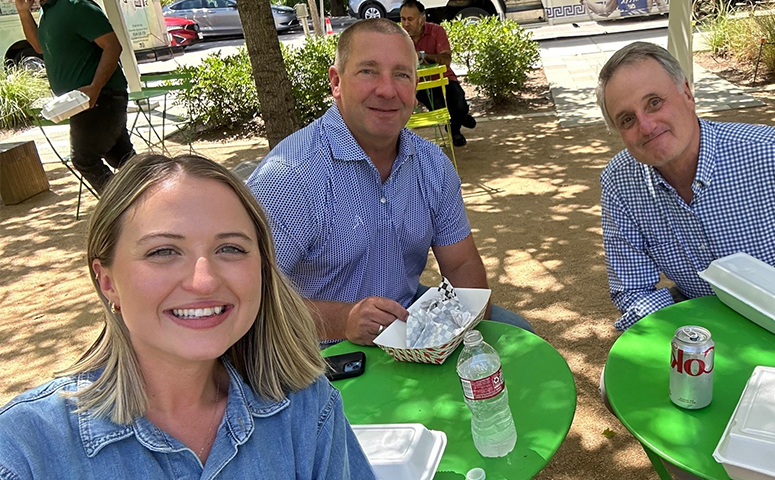
When we talk about activating a space, we are really talking about intentionality. The open kitchen concept is the perfect place to start with any workplace. While it may confuse traditional leaders who wonder why everyone is watching each other eat in the middle of the office, it is an incredible area to build camaraderie, energy and life. At Hughes Marino, the kitchen is the heartbeat of each of our offices. It’s where team meetings happen around our family farm tables, and where we are constantly meeting each other for coffee and to catch up on each other’s lives. It’s the focal point where all the engagement happens. But whether it’s a “Fika afternoon” on Fridays or a laughter-filled lunch, that table only works because we have very intentionally fostered a culture where we want to sit together. It works because leadership participates. It works because time together is modeled, not merely allowed. Building this camaraderie in the workplace isn’t just a way to foster nice relationships; meaningful connection is what builds strong, resilient teams that enjoy solving problems together, and can function at an even higher level to accomplish amazing results.
Of course, if your team is rushing out to eat separately because they dislike the office atmosphere, the most expensive kitchen in the world will not fix your culture. You have to be the one to give them the implicit permission to enjoy the space. That permission is demonstrated in small but powerful ways: by a leader who joins their team at the table, who schedules walking meetings through the neighborhood or who blocks time for connection instead of only for productivity. We often hear of companies who “bought all the stuff,” but then created an environment where if someone spent their lunch away from their desks, or actually used the pool table (within a reasonable timeframe), they felt like they might get fired. If your employees feel like they will be judged for taking twenty minutes to connect, those amenities are not benefits. They are just performative decorations.
As we often advise our clients: “If you want people to enjoy your amenities and enjoy where they work, you have to give them the space to do that.” Have a shuffleboard, pool table or other type of game? Encourage a monthly tournament! At minimal cost to companies, these activations encourage connection and foster new relationships that feed into an office where the energy and warmth are palpable.
The Power of Concentric Circles
The next layer of this activation concept is looking at the building itself through a lens of energy. We’ve had clients tour perfect projects that have every bell and whistle imaginable, yet they walk away feeling cold because no one is occupying the space. In 2026, the real luxury isn’t just a rooftop deck. It’s being in an environment where people are actually showing up and engaging. As you look at your own footprint, ask yourself if you’re utilizing the “concentric circles” of your space, from your immediate desk to the building’s common areas, to the neighborhood outside or to the coffee shops down the street, to drive productivity and spark joy.
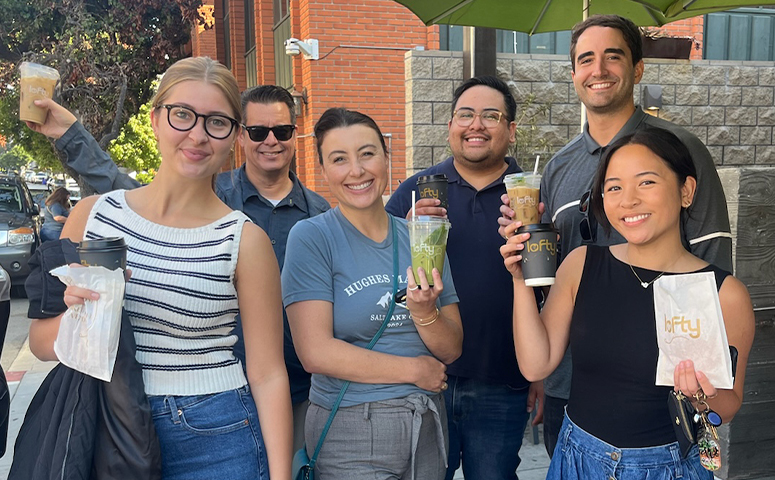
Sometimes the best way to activate your office is to stop looking for the next big thing to buy and start looking at how to utilize typical space features in a fresh way. For example, most companies have a conference room with a TV, but how many use it to let their operations team watch an hour of an old movie together or host a “crafternoon” to build camaraderie? That’s an activation of a space that is already there, but usually sits empty. A few ideas include transforming a break room wall into a gratitude wall, utilizing a main conference room for an internal fireside chat or using underutilized lounges for a monthly lunch book club. Hughes Marino has implemented optional quarterly meetings where a designated teammate leads a presentation on something they’re genuinely passionate about. So far, our team has learned everything from cooking in a tagine to hosting guests and the ins and outs of RVing! None of these sessions required new furniture, just new thinking, yet they’ve both activated amenities and fostered inspiring connection. The magic doesn’t happen because of the square footage, it happens because you’ve spent intentional time creating an environment where people are excited to be in the game together.
Breaking the “Check-the-Box” Mindset
Ultimately, the ROI on your real estate is not found in the lease rate alone. It’s found in whether or not the space is actually being lived in. We quickly dismiss the monthly “hottest amenity” lists because they miss the point of what executives should actually care about. No company can buy its way into a great culture, but it can certainly build a space that acts as a catalyst for one. “It’s like you bought that coat,” we tell people. “Have you put it on?” And more importantly, “Have you created a reason to wear it?”
Whether it’s a gym, a lounge or a simple coffee bar, these things are only as good as their use. If you want a workplace that people are excited to commute to, there has to be a system (or designated person) in place to make those spaces worth the trip. At each of our offices, we designate a “culture keeper” to organize birthday treats and team lunches, decorate for holidays throughout the year and facilitate office events. It’s a great way to help our teams build meaningful bonds and maintain a happy, infectious energy. That role isn’t about party planning, it’s about protecting intentionality and ensuring the space is continuously activated rather than occasionally admired.
The Bottom Line
At the end of the day, we believe that real estate is simply a tool for leadership. You can have the best office in the city, but without a reason for your team to engage with it, it is just a collection of expensive rooms. The magic happens when you stop viewing amenities as items on a checklist and start viewing them as opportunities to build and fuel meaningful connections that in turn build strong, resilient teams. Culture is built over time through intentional moments and habits. If you focus on building a team that actually likes each other and then give them the genuine freedom to utilize the space, the office becomes more than a place to work. It becomes a destination that reinforces your culture and supports the hard work happening in it every single day.